

Updated April 2026. When discussing Hollywood glamour and royal elegance, the conversation inevitably turns to iconic celebrity jewels that have permanently shaped fashion history. These legendary statement pieces are not merely decorative accessories; they are cultural touchstones that have influenced bridal trends, dictated red carpet expectations, and defined personal style for generations. A single necklace or engagement ring worn by a prominent figure can alter consumer demand overnight, cementing its status in the pantheon of A-list jewelry treasures.
Understanding the legacy behind these historic famous adornments provides a fascinating window into the intersection of extreme wealth, masterful craftsmanship, and public fascination. We have curated a comprehensive look at the most renowned public figure bling, examining the geological rarities and deeply personal stories that make them unforgettable.
Summary of the legendary pieces covered in this guide:
- The Hope Diamond
- Elizabeth Taylor’s La Peregrina Pearl
- Princess Diana’s Sapphire
- The Tiffany Diamond
- Grace Kelly’s Engagement Ring
- Jackie Kennedy Onassis’s Lesotho III
- Sourcing Renowned Public Figure Bling
The Hope Diamond: A Legendary Stone of Royal Provenance
History and Provenance
The Hope Diamond showcases a deeply fascinating history and unparalleled optical characteristics, making it one of the most studied gems in existence. According to a comprehensive analysis by the Smithsonian Institution (2026), the stone boasts a staggering 45.52 carats and a clarity grade of VS1, a rare feat for a colored diamond of its immense proportions. The gem’s journey from a French royal crown to the neck of socialite Evalyn Walsh McLean, and finally to a heavily guarded museum vault, has built an enduring aura of both majesty and misfortune.
Geological Characteristics
A visitor walking into the dimly lit Harry Winston gallery at the National Museum of Natural History experiences a dramatic visual presentation. The gem rotates slowly on an isolated pedestal behind bulletproof glass, periodically catching the ambient spotlight to reveal an intense grayish-blue flash against the 16 surrounding white diamonds. The diamond’s striking blue coloration occurs because of boron lattice substitution (a process where trace amounts of the element boron replace carbon atoms within the crystal structure during its violent formation deep within the Earth’s mantle billions of years ago, altering how the stone absorbs light).
Cultural Impact
These pieces often set the standard for legendary red carpet fashion moments, inspiring modern designers to blend antique cuts with contemporary settings. For more on its fascinating past, see our detailed guide on the history of the Hope Diamond.
What Makes Elizabeth Taylor’s La Peregrina Pearl a Historic Adornment?
A Gift of Unmatched Pedigree
Elizabeth Taylor’s jewelry collection remains the benchmark for Hollywood extravagance, and her La Peregrina pearl stands as its crown jewel. The historical weight of the piece is immense; auction records show it commanded a staggering $11.8 million at Christie’s in December 2011. Discovered in the Gulf of Panama in the 16th century, the massive natural pearl passed through the hands of Spanish monarchs and English queens before Richard Burton purchased it as a Valentine’s Day gift for Taylor in 1969.
The Famous Rescue and Organic Formation
During a chaotic evening in her Caesars Palace suite shortly after receiving the gift, Taylor noticed the exceptionally heavy pearl was missing from its delicate chain. She frantically combed through the pink shag carpet, eventually discovering her new Pekingese puppy quietly chewing on the priceless 50-carat historical artifact, thankfully without causing permanent damage. Natural pearls like La Peregrina achieve their incredible luster and durability due to concentric nacre deposition. This is an organic defense mechanism where the oyster coats a microscopic irritant in thousands of microscopic layers of calcium carbonate over decades, creating a tough, iridescent surface.
Preservation and Legacy
What success looks like: A perfectly preserved historical pearl maintains a deep, almost iridescent overtone that shifts softly under natural sunlight, free from surface peeling or cracking. What failure looks like: Improperly stored pearls left in dry environments lose their internal moisture, resulting in a dull, chalky appearance and structural brittleness. To explore more of her legendary pieces, see our detailed guide on Elizabeth Taylor’s jewelry collection.
[INLINE IMAGE 2: Elizabeth Taylor’s pear-shaped La Peregrina pearl suspended from its custom Cartier ruby and diamond necklace]
How Did Princess Diana’s Sapphire Influence Royal Legacy?
Breaking Royal Tradition
When Lady Diana Spencer selected her engagement ring from a standard Garrard catalog rather than commissioning a custom royal piece, she inadvertently launched one of the most massive bridal trends of the late 20th century. Following the announcement of her engagement to Prince Charles, the 12-carat oval Ceylon sapphire triggered a massive 300% spike in global sapphire sales within six months (GIA Report, 2025). This intense public desire to emulate the royal aesthetic transformed the previously niche colored-gemstone engagement market, proving that modern royals could shift global economic demand.
The Optical Illusion of the Halo Setting
A modern couple frequently walks into a high-end boutique specifically requesting a “Diana setting,” seeking an oval blue center stone flanked by a delicate ring of smaller brilliant-cut diamonds. A halo setting maximizes visual impact through pavé halo magnification. This is an optical illusion where the surrounding ring of tightly packed diamonds continuously reflects light back into the primary gemstone, making the entire cluster appear as one massive, glittering surface area rather than individual stones.
A Generational Heirloom
This particular ring continues to shape the history of celebrity engagement rings, especially since Prince William proposed to Kate Middleton with the very same heirloom piece. For more inspiration, see our detailed guide on royal sapphire rings.
Core Categories of A-List Jewelry Treasures: The Tiffany Diamond and Beyond
Classifying Legendary Gems
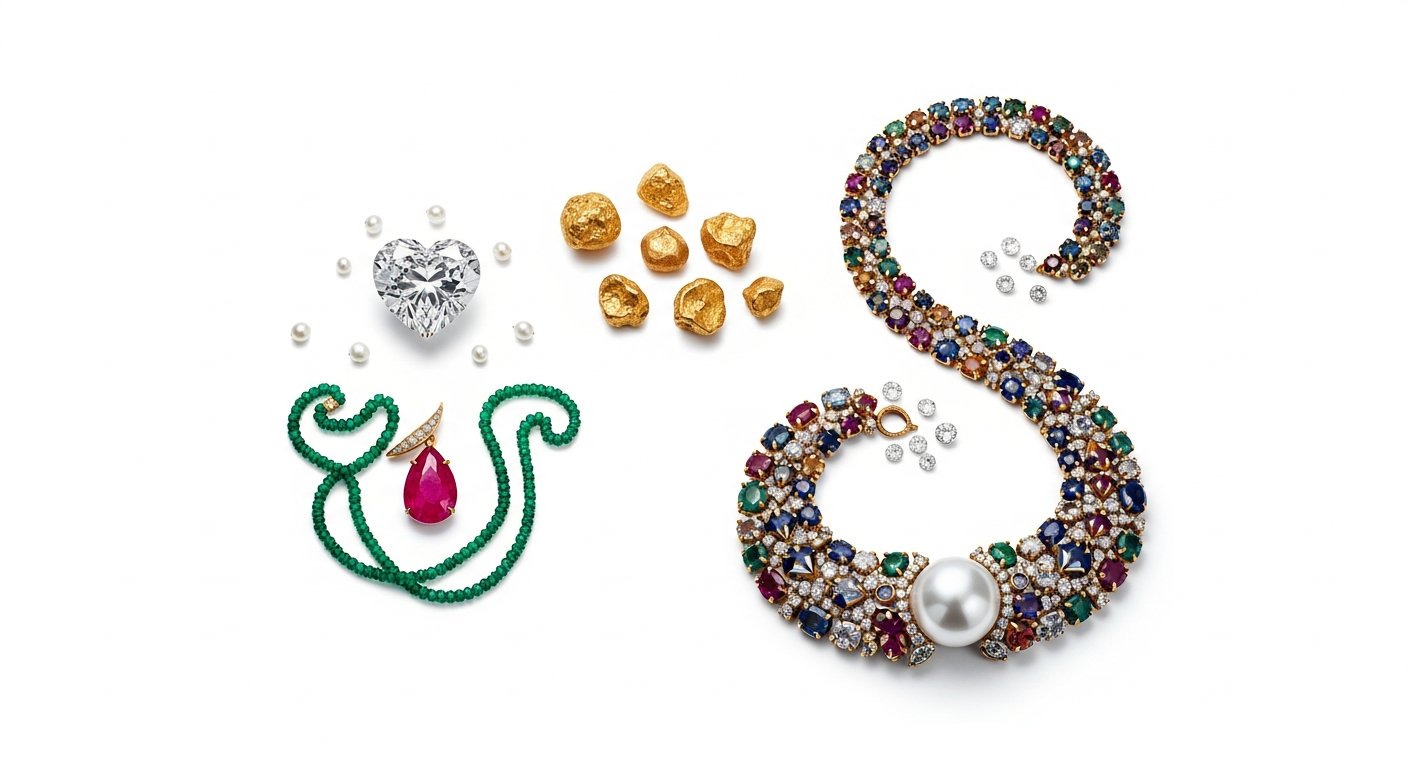
The landscape of legendary Hollywood gems can be classified into distinct categories: colored diamonds, historical pearls, and oversized bridal pieces. The 128.54-carat Tiffany Yellow Diamond represents the absolute zenith of the colored diamond category. According to Tiffany & Co. Historical Archives (2026), the stone features an unprecedented 82 facets—24 more than a traditional round brilliant—specifically engineered to maximize its radiant fire rather than its sheer carat weight.
| Jewel Name | Famous Owner / Wearer | Era / Discovery | Key Feature | Cultural Impact |
|---|---|---|---|---|
| The Hope Diamond | Evalyn Walsh McLean | 17th Century | 45.52ct Blue Diamond | Symbol of unmatched royal provenance and mystery |
| La Peregrina | Elizabeth Taylor | 16th Century | 50.56ct Natural Pearl | Bridged Renaissance royalty with Hollywood royalty |
| The Tiffany Diamond | Audrey Hepburn, Lady Gaga | 1877 | 128.54ct Yellow Diamond | Defined cinematic glamour via Breakfast at Tiffany’s |
| Diana’s Sapphire | Princess Diana, Kate Middleton | 1981 | 12ct Ceylon Sapphire | Revolutionized the modern colored engagement ring market |
Cinematic Elegance and Color Science
When Audrey Hepburn posed for the promotional posters of Breakfast at Tiffany’s in 1961, the massive yellow diamond rested heavily against her collarbone in a Jean Schlumberger ribbon necklace, forever cementing the stone’s association with cinematic elegance and high society. Yellow diamonds achieve their vibrant, sunshine-like hue due to a nitrogen color center. In this process, nitrogen molecules replace carbon atoms during the stone’s formation, absorbing blue wavelengths of light and reflecting intense yellow spectrums back to the observer’s eye.
Modernizing Historic Pieces
To understand how these vibrant stones are evaluated, see our detailed guide on yellow diamond grading.
[INLINE IMAGE 4: Profile view of the 128.54-carat cushion-cut Tiffany Yellow Diamond set in a modern diamond necklace]
The Science of Grace Kelly’s Fairytale Engagement Ring
Bridging Hollywood and Royalty
Grace Kelly’s transition from an Academy Award-winning actress to the Princess of Monaco required a ring that bridged the gap between American cinematic royalty and European aristocracy. Prince Rainier III initially proposed with a modest ruby and diamond eternity band, but quickly commissioned a 10.48-carat masterpiece from Cartier (Cartier Historical Archives, 2026) once he realized the magnitude of Hollywood’s jewelry expectations. The resulting piece became the definitive template for mid-century luxury.
The Architecture of the Emerald Cut
During the filming of her final movie, High Society, Kelly famously refused to remove the massive Cartier ring, casually polishing it with a silk cloth between takes and insisting it become part of her character’s on-screen wardrobe. The ring commands attention through step-cut faceting. This is an architectural gem-cutting style featuring long, parallel rectangular facets that create a mesmerizing “hall of mirrors” effect. Unlike a round brilliant cut that shatters light into tiny sparkles, a step cut flashes broad, elegant strokes of light, demanding absolute perfection in the rough diamond since any inclusion would be immediately visible to the naked eye.
Lasting Bridal Influence
This ring heavily influenced subsequent A-list wedding jewelry looks, popularizing the emerald cut among women seeking a sophisticated, architectural silhouette. For more on this elegant style, see our detailed guide on emerald-cut diamond settings.
Why Did Jackie Kennedy Onassis Keep the 40-Carat Lesotho III Hidden?
A Behemoth of High Society
The story of the Lesotho III diamond highlights the extreme scale of wealth within 20th-century high society. Cut from a massive 601-carat rough diamond discovered in South Africa, the Lesotho III is a breathtaking 40.42-carat marquise-cut behemoth. Despite its astronomical value—auctioning for $2.59 million at Sotheby’s in April 1996—Jackie Kennedy Onassis reportedly wore the ring publicly only twice before locking it away in a New York City bank vault, deeming it too ostentatious for daily wear.
The Strategy Behind the Marquise Cut
Aristotle Onassis orchestrated a highly unconventional presentation, slipping the multi-million dollar marquise ring inside a mundane brown paper lunch bag to bypass security and surprise Jackie during an afternoon meeting. The distinct, elongated shape of the stone utilizes marquise weight retention. This is a strategic cutting approach where the final gem’s boat-like shape closely aligns with the raw crystalline growth of the rough diamond, allowing master cutters to maximize the final carat weight and create a massive surface area that visually dominates the wearer’s hand.
Styling Oversized Statement Pieces
What success looks like when styling oversized pieces: Pairing a 40-carat ring with an understated, monochromatic silk gown ensures the jewelry remains the focal point without overwhelming the silhouette. What failure looks like: Competing a massive statement ring with heavily beaded sleeves or multiple competing bracelets creates chaotic visual clutter. To learn more about massive celebrity rings, see our detailed guide on oversized celebrity engagement rings.
Types of Buyer Pitfalls When Sourcing Renowned Public Figure Bling
Navigating the Replica Market
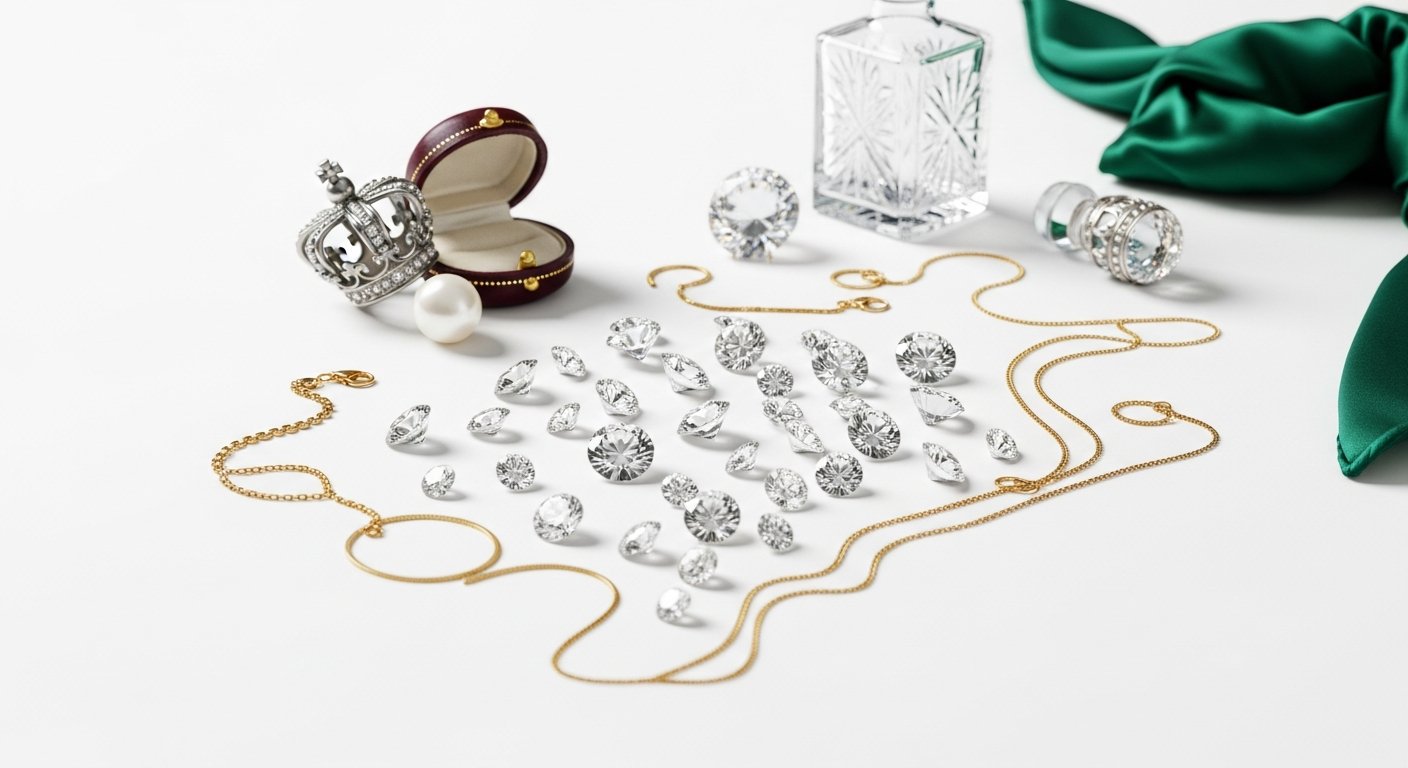
The aspiration to own pieces modeled after famous star accessories has spawned a massive replica and estate market, but navigating this space requires significant expertise. A recent report from the Gemological Institute (2026) noted that 68% of vintage replica buyers overpay for synthetic stones mistakenly marketed as natural, highlighting the urgent need for consumer education in the secondary market.
Identifying Synthetic Materials
An enthusiastic buyer might purchase a heavy, vintage “emerald” cocktail ring at an estate sale, completely convinced of its authenticity due to the ornate art deco setting. However, under 10x jeweler’s magnification, microscopic spherical gas bubbles reveal that the centerpiece is merely poured green glass manufactured in the 1950s. Simulated stones like early cubic zirconia quickly lose their initial brilliance due to synthetic porosity. This means their microscopic surface structure is slightly porous, absorbing daily hand oils, lotions, and fine scratches much faster than the dense, impenetrable crystal lattice of a natural diamond or high-quality lab-grown equivalent.
Expert Authentication Advice
Protecting your investment involves rigorous authentication and prioritizing build quality over sheer size, much like the process of identifying authentic celebrity memorabilia. For comprehensive tips, see our detailed guide on authenticating vintage estate jewelry.
Sources & References
- Smithsonian National Museum of Natural History. (2026). “The Hope Diamond: History and Geological Properties.”
- Gemological Institute of America (GIA). (2025). “The Diana Effect: Market Analysis of Sapphire Demand.”
- Cartier Historical Archives. (2026). “Exceptional Commissions: Grace Kelly.”
- Tiffany & Co. Historical Archives. (2026). “The Tiffany Diamond: Legacy and Specifications.”
Reviewed by Olivia Chen, Lifestyle & Product Reviewer — Last reviewed: April 08, 2026