

The Enduring Allure and Legacy of the Diamond
For generations, the diamond has been synonymous with engagement. Its mystique and rarity, born deep within the Earth’s mantle over billions of years, have imbued it with an almost mythical status. The tradition of gifting a diamond engagement ring gained significant traction in the 20th century, largely fueled by clever marketing campaigns that cemented its image as the ultimate symbol of everlasting love, strength, and commitment. When we speak of diamonds, we are often referring to natural diamonds – geological marvels formed under immense pressure and heat, then brought to the surface through volcanic activity.
What makes a diamond so coveted? Beyond its powerful symbolism, its physical properties are truly remarkable. Diamonds are the hardest known natural substance on Earth, scoring a perfect 10 on the Mohs scale of mineral hardness. This incredible durability means they are resistant to scratches and abrasions, making them ideal for daily wear – a quality essential for a piece of jewelry intended to last a lifetime. This robustness also contributes to their longevity and ability to retain their breathtaking sparkle through years of wear.
The beauty of a diamond is famously judged by the “4 Cs”: Cut, Color, Clarity, and Carat Weight.
- Cut: Often considered the most crucial of the 4 Cs, the cut refers to how well a diamond’s facets interact with light. A perfectly cut diamond will exhibit exceptional brilliance (the white light reflected), fire (the dispersion of light into spectral colors), and scintillation (the sparkle a diamond produces as it moves). It’s not about the shape (like round or oval) but the precision of its proportions, symmetry, and polish.
- Color: Diamond color is graded on a scale from D (colorless) to Z (light yellow or brown). The less color a diamond possesses, the rarer and more valuable it typically is. Colorless diamonds allow the most light to pass through, enhancing their brilliance.
- Clarity: Clarity refers to the presence or absence of inclusions (internal flaws) and blemishes (external imperfections). Graded from Flawless (FL) to Included (I), higher clarity diamonds are rarer and more expensive, as these imperfections can interfere with light reflection.
- Carat Weight: This measures a diamond’s weight, not its size, though weight generally correlates with size. One carat equals 200 milligrams. Larger diamonds are rarer, and therefore command higher prices per carat.
The investment aspect of a natural diamond is also a significant consideration for many. While not a liquid asset in the traditional sense, natural diamonds, particularly those of exceptional quality, have historically held and often appreciated in value. They represent a tangible asset, a heirloom to be passed down through generations, carrying with it stories and sentimental value that are truly priceless. For those who cherish tradition, legacy, and the unparalleled heritage of a natural wonder, the diamond remains an undisputed champion.
Moissanite: A Star-Born Sparkle for the Modern Era
Imagine a gemstone that literally fell from the stars. That’s the extraordinary origin story of moissanite. First discovered in 1893 by Nobel Prize-winning French chemist Dr. Henri Moissan in a meteorite crater in Arizona, natural moissanite is incredibly rare, found only in minute quantities in certain geological formations and meteorites. It is composed of silicon carbide, a unique crystalline material. For over a century after its discovery, natural moissanite remained a scientific curiosity rather than a gemstone for jewelry.
It wasn’t until the late 20th century that scientists at a company now known as Charles & Colvard perfected the process of creating gem-quality moissanite in a laboratory. This breakthrough made it possible to produce moissanite stones large enough and pure enough to be faceted into stunning gemstones, bringing its celestial sparkle to the world of fine jewelry. Today, virtually all moissanite used in engagement rings and other jewelry is lab-grown, making it an ethically sourced and environmentally friendly choice from its very inception.
Lab-grown moissanite shares many desirable characteristics with natural diamonds, leading to its rapid rise in popularity. Its dazzling appearance, combined with its robust physical properties, makes it an attractive alternative for those seeking a brilliant and durable engagement ring without the premium price tag associated with natural diamonds. The creation of moissanite in a controlled laboratory environment ensures consistency in quality, allowing consumers to select stones with predictable brilliance and clarity.
The appeal of moissanite extends beyond its beauty and durability. For many, its lab-grown status is a significant advantage. It offers a clear conscience, free from any concerns about ethical sourcing or environmental impact often associated with traditional mining. This aligns perfectly with the values of a new generation of consumers who prioritize transparency, sustainability, and responsible consumption in all aspects of their lives, including their most significant purchases. As we delve deeper, we’ll see how moissanite stands up against the diamond in a head-to-head comparison, revealing why it has become such a compelling choice for modern proposals.
Head-to-Head: Moissanite vs. Diamond – A Technical Deep Dive
Brilliance and Fire: The Sparkle Factor
- Diamond: Renowned for its unparalleled brilliance (white light reflection) and fire (spectral colors). A well-cut diamond reflects light internally, creating a captivating dance of light. Its refractive index is 2.42, and its dispersion (how light splits into colors) is 0.044.
- Moissanite: Often described as having a “disco ball” effect due to its intense sparkle. Moissanite actually has a higher refractive index (2.65-2.69) and a significantly higher dispersion (0.104) than diamond. This means moissanite typically exhibits more fire and a greater rainbow sparkle, especially in direct sunlight or under bright lights. While some find this extra fire mesmerizing, others prefer the more subtle, white sparkle of a diamond.
Hardness and Durability: Built to Last
- Diamond: The hardest known natural substance, scoring a 10 on the Mohs scale. This extreme hardness makes diamonds exceptionally resistant to scratches and abrasions, ensuring their luster endures for generations. They are also incredibly tough, meaning they are resistant to breaking or chipping.
- Moissanite: A very close second, scoring 9.25 on the Mohs scale. This makes moissanite one of the hardest gemstones available, second only to diamond. It is highly resistant to scratching and daily wear, making it an excellent choice for an engagement ring that will be worn every day. While not quite as hard as a diamond, it is significantly harder than most other gemstones, ensuring excellent durability.
Color: From Colorless to Near Colorless
- Diamond: Graded on a D-Z scale, with D being completely colorless. High-quality diamonds are valued for their lack of color, allowing maximum light reflection.
- Moissanite: Modern moissanite is typically produced in “colorless” (D-F range) or “near-colorless” (G-I range) grades. While earlier moissanite sometimes exhibited a subtle yellowish or greenish tint, today’s lab-grown moissanite is virtually indistinguishable from a colorless diamond to the untrained eye, especially in smaller sizes. Larger moissanite stones might still show a very faint warm hue under certain lighting conditions, but this is increasingly rare with advancements in production.
Clarity: The Absence of Inclusions
- Diamond: Clarity is graded based on the presence of inclusions (internal characteristics) and blemishes (external characteristics). High clarity diamonds are rarer and more expensive.
- Moissanite: Because moissanite is lab-grown in controlled environments, it typically has fewer inclusions than natural diamonds. Most lab-grown moissanite stones are equivalent to VS (Very Slightly Included) or VVS (Very Very Slightly Included) clarity grades, meaning any inclusions are microscopic and not visible to the naked eye. This consistency in clarity contributes to its overall brilliant appearance.
Weight: A Subtle Difference
- Diamond: The standard unit of measurement for diamonds is the carat.
- Moissanite: Moissanite is slightly lighter than diamond. A 1-carat diamond will appear visually similar in size to a 1.1-carat moissanite. Therefore, moissanite is usually sold by its millimeter dimensions or by its “diamond equivalent weight” (DEW) to give consumers a better understanding of its visual size compared to a diamond.
Price: The Most Significant Differentiator
- Diamond: Natural diamonds, particularly those of high quality, are significantly more expensive, with prices escalating exponentially with carat weight and quality. This is due to their rarity, the extensive mining process, and the intricate supply chain. Lab-grown diamonds, while more affordable than natural diamonds, are still typically more expensive than moissanite.
- Moissanite: This is where moissanite truly shines for budget-conscious couples. Moissanite is substantially more affordable than both natural and lab-grown diamonds of comparable size and apparent quality. For example, a 1-carat equivalent moissanite can cost anywhere from 1/10th to 1/20th the price of a similar quality natural diamond, allowing individuals to purchase a much larger or higher-quality stone for their budget. This makes it an incredibly attractive option for those who want a significant sparkle without the significant investment.
In essence, while both gemstones offer incredible beauty and durability, moissanite provides a distinct, fiery sparkle and exceptional value, making it a compelling choice for those who prioritize grandeur and budget. The diamond, on the other hand, offers a classic, white sparkle and carries the weight of centuries of tradition and natural rarity.
The Ethical & Sustainable Choice: A Modern Consideration
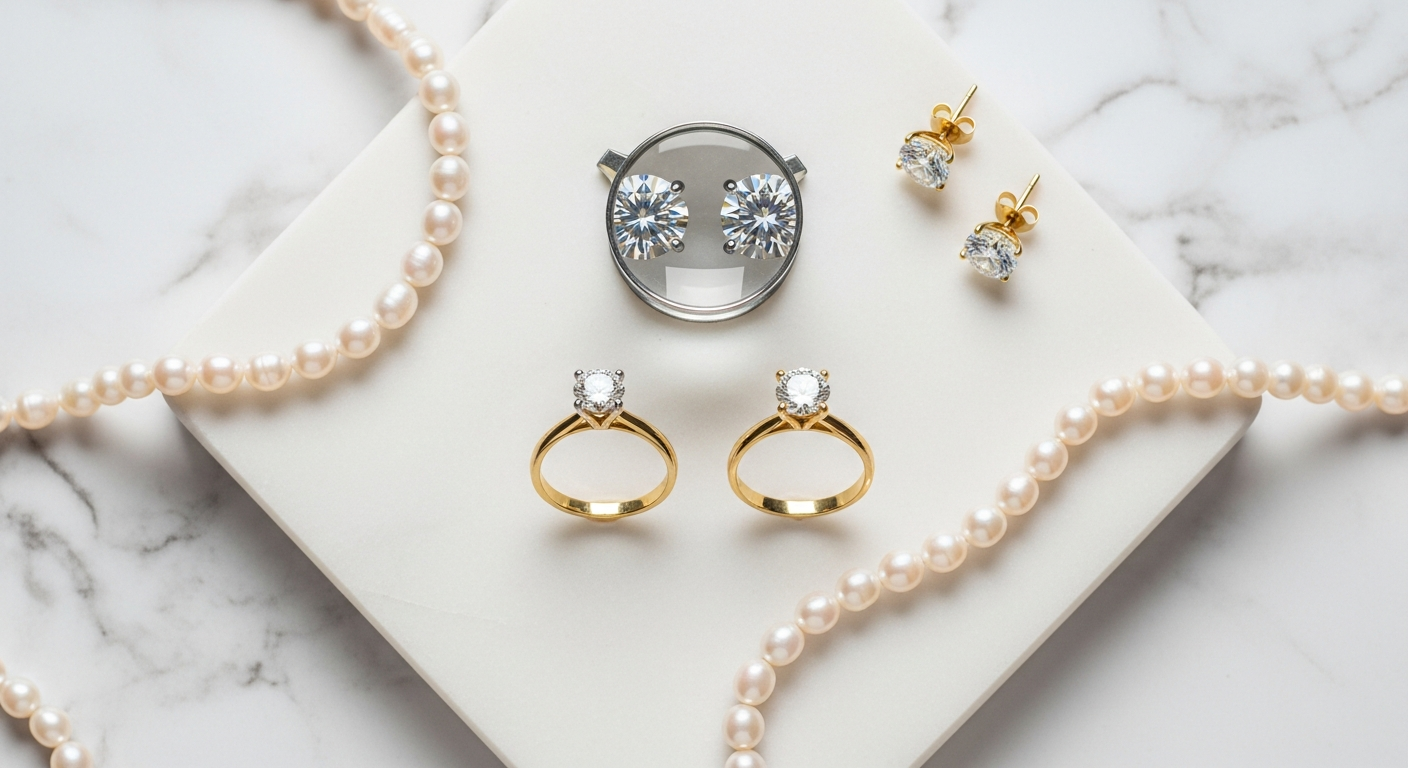
In today’s world, conscious consumerism is more than a trend; it’s a fundamental shift in values. Brides and grooms are increasingly concerned not just with the beauty and cost of their engagement ring, but also with its origin story. The ethical and environmental implications of gemstone sourcing have become pivotal factors in the decision-making process.
Natural Diamonds: The Ethical Landscape
The natural diamond industry has faced scrutiny over the years regarding “blood diamonds” or “conflict diamonds” – those mined in war zones and sold to finance insurgencies. While significant progress has been made through initiatives like the Kimberley Process Certification Scheme, which aims to prevent conflict diamonds from entering the legitimate supply chain, concerns about worker exploitation, environmental impact of mining, and transparency in the supply chain still persist for some consumers. Reputable jewelers commit to sourcing diamonds ethically, often providing documentation of their stone’s origin. However, the sheer scale and complexity of the global diamond trade mean that complete certainty can sometimes be challenging.
Lab-Grown Diamonds: A Controlled Origin
An increasingly popular alternative to natural diamonds are lab-grown diamonds. These are chemically, physically, and optically identical to natural diamonds, differing only in their origin. Created in controlled laboratory environments that replicate the intense heat and pressure conditions deep within the Earth, lab-grown diamonds offer an ethical and often more sustainable choice. They eliminate concerns about conflict financing and significantly reduce the environmental footprint associated with traditional mining. The energy consumption of creating lab-grown diamonds is a factor, but many producers are moving towards renewable energy sources to further enhance their sustainability credentials.
Moissanite: The Ultimate Ethical & Sustainable Option
Moissanite, being almost exclusively lab-grown, stands out as an inherently ethical and sustainable choice. Its production does not involve mining, which means:
- No Environmental Disruption: No large-scale land excavation, habitat destruction, or significant waste production associated with mining operations.
- No Conflict Concerns: The origins are transparent and controlled, eliminating any risk of funding conflicts or unethical labor practices.
- Reduced Carbon Footprint: While energy is required for laboratory growth, many moissanite producers are also investing in greener technologies and renewable energy, further minimizing their environmental impact.
For couples who prioritize a clear conscience alongside a stunning sparkle, moissanite offers an undeniable advantage. It allows them to celebrate their love with a beautiful, durable gemstone that aligns perfectly with their commitment to a more responsible and sustainable future. This ethical dimension adds a profound layer of meaning to the ring, making it not just a symbol of love, but also a reflection of shared values.
Beyond the Stone: Setting Styles and Celebrity Inspiration for 2026
While the choice between moissanite and diamond is paramount, the gemstone is just one component of the overall masterpiece. The setting, cut, and design of an engagement ring play an equally crucial role in defining its aesthetic and reflecting personal style. The world of celebrity engagements often serves as a vibrant barometer for upcoming trends, offering a glimpse into what will be dazzling brides-to-be in 2026.
Popular Cuts and Shapes for 2026
Looking ahead to Celebrity Engagement Ring Styles 2026, we anticipate a continued love affair with classic elegance, but with modern twists.
- Oval Cut: The oval continues its reign as a celebrity favorite. Its elongated shape flatters the finger, making it appear longer and more slender. It offers significant sparkle and a larger surface area than a round brilliant of the same carat weight, providing an impressive visual impact. We’ve seen countless stars sporting ovals, and this trend is only set to grow, perhaps with even more dramatic proportions.
- Emerald Cut: For those who appreciate understated sophistication and geometric lines, the emerald cut remains a powerful choice. Its step cuts create a “hall of mirrors” effect rather than a fiery sparkle, exuding an old-Hollywood glamour that is perpetually chic. Expect to see emerald cuts paired with sleek, minimalist settings or flanked by baguettes for an Art Deco feel.
- Pear Cut: The elegant pear shape, a hybrid of round and marquise cuts, is gaining significant traction. Its unique teardrop silhouette can be worn with the point facing up or down, offering versatility and a distinctive flair. Celebrities are embracing this cut for its flattering appearance and romantic appeal.
- Cushion Cut: Combining the soft edges of a round brilliant with a square shape, the cushion cut offers a romantic, vintage-inspired look. Its large facets provide excellent brilliance and fire, often resembling a pillow, hence its name. This cut is perfect for those who desire both sparkle and a touch of antique charm.
Trending Setting Styles
Beyond the cut, the setting profoundly influences the ring’s overall character.
- Solitaire Settings: The timeless solitaire, often a four or six-prong setting, remains a staple. Its simplicity allows the chosen gemstone, whether a brilliant diamond or a fiery moissanite, to take center stage, emphasizing its beauty and sparkle without distraction. This classic choice ensures enduring elegance.
- Hidden Halos and Delicate Pave: While grand halos have been popular, 2026 might see a shift towards more subtle embellishments. Hidden halos, which are visible only from the side, add an unexpected sparkle, while delicate pave bands enhance the main stone without overpowering it. This offers an elegant way to incorporate extra sparkle.
- Three-Stone Rings: Symbolizing the past, present, and future, the three-stone ring is a deeply meaningful choice. Whether featuring three identical stones or a larger center stone flanked by two smaller ones, this style offers significant presence and a rich narrative.
- Yellow Gold Revival: While white gold and platinum have dominated for years, yellow gold is making a strong comeback, particularly for vintage-inspired designs and warmer skin tones. Its rich hue provides a beautiful contrast to both colorless and near-colorless stones.
Whether you opt for a diamond or a moissanite, these trending styles for 2026 offer a wealth of possibilities to create a ring that is both fashionable and deeply personal. Looking at how celebrities showcase these styles can provide endless inspiration for your own unique statement piece.
Accessorizing Your Sparkle: Completing the Look
An engagement ring is undoubtedly the star of your hand, but it’s also part of a larger personal style narrative. For the Celebrity Exchange woman, every detail, from the shimmer on her wrist to the scent she leaves in her wake, contributes to her overall aura of sophistication and confidence. When considering your engagement ring, think about how it integrates with your existing jewelry collection and your preferred lifestyle accessories.
The Timeless Elegance of the Tennis Bracelet
Complementing your engagement ring with other exquisite pieces can elevate your entire look. One such piece that embodies effortless luxury and pairs beautifully with any engagement ring is the tennis bracelet. Its history is as charming as its sparkle.
The term “tennis bracelet” gained worldwide recognition in 1987, when tennis star Chris Evert famously stopped her US Open match to retrieve her diamond bracelet that had come unclasped and fallen off her wrist. Since then, this continuous line of individually set diamonds (or other gemstones like moissanite) has become a classic, beloved for its versatility and enduring appeal.
Tennis Bracelet History And How To Style It reveals its evolution from a sports-related incident to a high-fashion staple. To style a tennis bracelet with your engagement ring:
- Stacking: For a modern, maximalist look, stack a delicate tennis bracelet with other thin bangles or even your watch on the same wrist as your engagement ring.
- Classic Pairing: For timeless elegance, wear your tennis bracelet on the opposite wrist of your engagement ring, allowing both pieces to shine independently while creating a cohesive, balanced sparkle.
- Bridal Bliss: A tennis bracelet is a perfect accessory for your wedding day, adding an extra touch of glamour that beautifully complements your bridal gown and new wedding band.
Whether your engagement ring features a diamond or a moissanite, a tennis bracelet made with either gemstone will create a harmonious and luxurious ensemble, proving that elegance is truly in the details.
The Scent of Sophistication: Celebrity Perfume Choices and Trends
Beyond visible accessories, the invisible accessory of fragrance plays a powerful role in personal expression and memory. Just as an engagement ring symbolizes a moment, a signature scent can forever evoke the emotions and atmosphere of your special occasions.
Celebrity Perfume Choices And Trends often highlight fragrances that are unique, luxurious, and embody a certain star’s persona. For 2026, we anticipate a trend towards bespoke or niche fragrances that offer a sense of individuality, moving beyond mass-market scents. Expect to see celebrity figures gravitating towards:
- Sustainable & Clean Fragrances: Aligning with the ethical considerations in jewelry, perfumes with transparent ingredient lists, sustainable sourcing, and eco-friendly packaging will be highly sought after.
- Gender-Neutral Scents: The lines between traditionally masculine and feminine fragrances continue to blur, with celebrities embracing complex, sophisticated scents that defy categorization.
- Personalized Scent Layering: Rather than one signature scent, some celebrities are known for layering different perfumes to create a truly unique aroma that evolves throughout the day.
Choosing a perfume for your engagement or wedding day can create an olfactory memory that you’ll cherish for years. Imagine catching a whiff of that special scent and instantly being transported back to the moment you said “yes” or walked down the aisle, your brilliant engagement ring sparkling under the lights. Whether it’s a classic floral, a warm oriental, or a fresh citrus, let your fragrance complete the picture of your celebratory sparkle, making every moment unforgettable.
Making Your Choice: A Personal Journey
Ultimately, the decision between a moissanite and a diamond for your engagement ring is a deeply personal one, reflecting your values, aesthetic preferences, and financial comfort. There is no universally “better” stone; only the one that is perfect for you and your partner.
Choose a Diamond if:
- You prioritize tradition, heritage, and the symbolic rarity of a natural gemstone formed over billions of years.
- You prefer the classic, pure white sparkle and subtle fire unique to diamonds.
- The investment aspect and potential heirloom quality of a natural diamond are important to you.
- You are comfortable with the higher price point associated with natural diamonds or are considering a lab-grown diamond for a more ethical alternative that is chemically identical.
Choose Moissanite if:
- You are drawn to an intense, vibrant, and fiery sparkle that often outshines a diamond.
- Budget is a significant consideration, and you desire a larger, more impressive stone for a fraction of the cost.
- Ethical and sustainable sourcing are paramount, and you prefer a lab-grown gemstone with a minimal environmental footprint.
- You appreciate innovation and a gemstone with a unique, star-born origin story.
Both moissanite and diamond are incredibly durable, beautiful, and timeless choices for an engagement ring, capable of symbolizing your eternal love. We encourage you to visit reputable jewelers, view both stones in person, and compare them under various lighting conditions. Feel them on your finger, consider the setting styles that appeal to you, and discuss your priorities openly with your partner.
At Celebrity Exchange, we believe that your engagement ring should be a true reflection of your unique love story and personal style. Whether you’re inspired by the classic elegance of celebrity engagement rings in 2026, the historical charm of a tennis bracelet, or the allure of a bespoke perfume, the most beautiful ring is the one that resonates most deeply with you. May your choice bring you immense joy and sparkle for a lifetime of cherished memories.
Frequently Asked Questions
Recommended Resources
You might also enjoy How To Start Working Out At Home For Women Beginners from The Contextual Life.
For more on moissanite vs diamond, see What Is Self Love And Why It Matters For Women on Sometimes Daily.