



The Enduring Allure of the Tennis Bracelet: A Celebrity Exchange Perspective
In the constellation of fine jewelry, few pieces shine with the consistent brilliance and universal appeal of the tennis bracelet. For generations, this delicate yet dazzling strand of diamonds has captivated hearts, adorning the wrists of royalty, Hollywood A-listers, and fashionistas alike. At Celebrity Exchange, we’re keenly aware of its perennial presence in the wardrobes of the most influential figures. It’s not uncommon to spot a tennis bracelet elegantly circling the wrist of an actress accepting an award, a musician gracing a magazine cover, or a socialite attending an exclusive gala. Its subtle sparkle and undeniable sophistication make it the ultimate versatile accessory, capable of elevating any ensemble from casual chic to black-tie magnificent. This enduring allure stems not only from its inherent beauty but also from its remarkable adaptability, making it a true investment piece that transcends fleeting fads. It’s a testament to classic design, a whispered statement of luxury that speaks volumes without ever needing to shout.
The tennis bracelet occupies a unique space in the jewelry box, often bridging the gap between everyday wearability and special occasion grandeur. Unlike more audacious statement pieces, its continuous line of diamonds offers a refined gleam that complements rather than overwhelms. This makes it an ideal choice for those who appreciate understated luxury, a piece that signifies good taste and an appreciation for craftsmanship. Its presence on the wrists of celebrities often serves as a silent endorsement of its timelessness, proving that true style never goes out of fashion. From delicate single strands to bolder, multi-row designs, the tennis bracelet continues to evolve while retaining its core identity, proving its mettle as a true icon in the world of fine jewelry. Its ability to effortlessly transition between contexts, from a casual brunch to a high-stakes red carpet event, is a key factor in its enduring popularity and its cherished status among those who define global style.
From “Eternity” to “Tennis”: Unraveling the Iconic Bracelet’s History
Every legendary piece of jewelry has a story, and the tennis bracelet’s narrative is particularly enchanting, marked by both a timeless design heritage and a pivotal moment that forever cemented its place in popular culture. Its journey from a revered classic to a universally recognized icon is a testament to its inherent beauty and the power of a single, unforgettable event.
The Pre-Tennis Bracelet Era: A Legacy of Line Bracelets
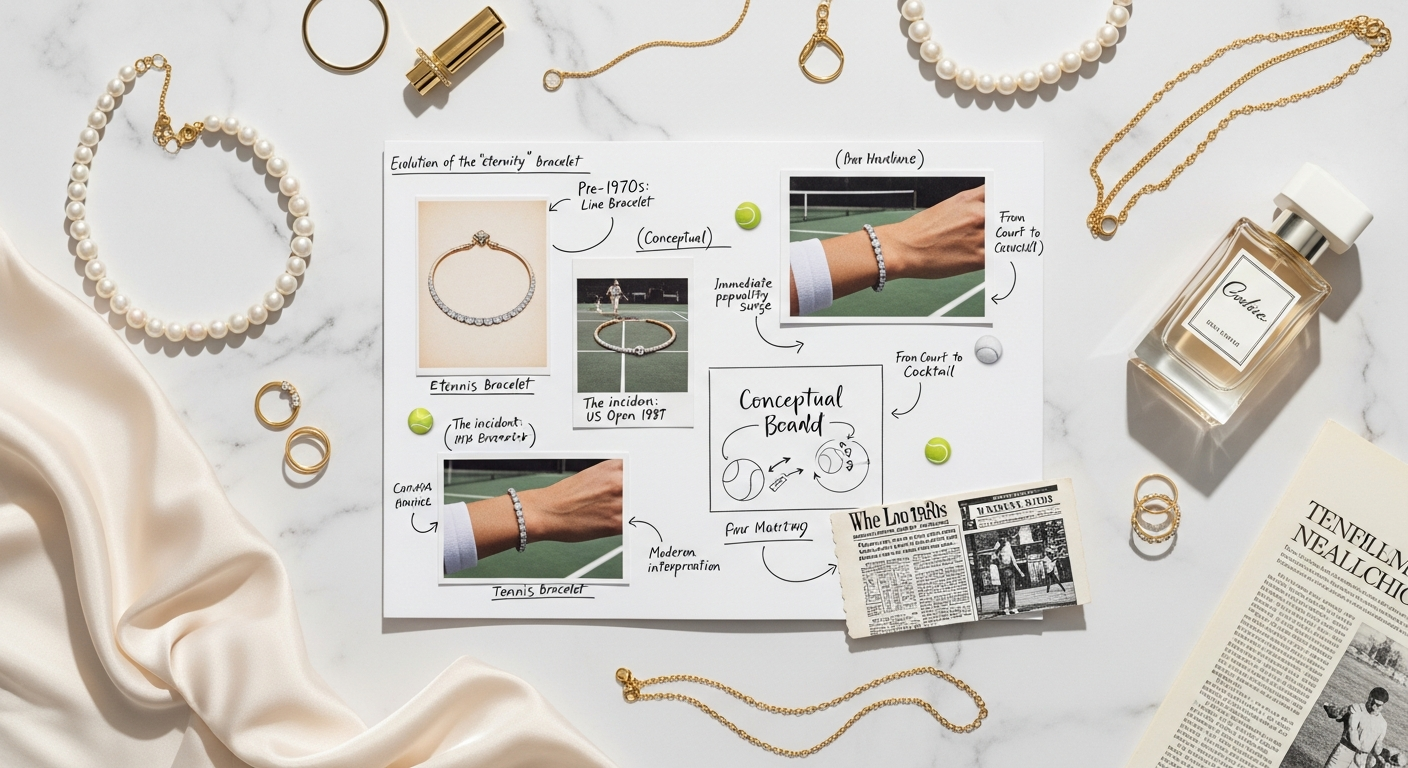
Before it earned its sporty moniker, the tennis bracelet was simply known as a “line diamond bracelet” or an “eternity bracelet.” These exquisite pieces featured a continuous, flexible strand of individually set diamonds, designed to encircle the wrist with an unbroken stream of sparkle. The concept of an eternity band, symbolizing everlasting love and commitment, had long been popular in ring form, and its translation to a bracelet was a natural progression. Jewelers in the early to mid-20th century crafted these bracelets with meticulous precision, using various settings like prong, bezel, and channel to secure each diamond while maximizing its brilliance. They were considered a sophisticated choice for formal wear, a discreet yet opulent accessory favored by high society and those who appreciated subtle luxury. The unbroken line of diamonds evoked a sense of infinite beauty and grace, making it a cherished gift and a treasured heirloom. These early iterations laid the groundwork for the design we know today, establishing the fundamental aesthetic of a flexible, continuous stream of diamonds that would eventually capture the world’s attention.
The Legendary Moment: Chris Evert and the Birth of the “Tennis Bracelet”
The transformation from “eternity bracelet” to “tennis bracelet” is inextricably linked to one of the most memorable moments in sports and fashion history, occurring during the 1987 US Open. The legendary American tennis player, Chris Evert, known not only for her powerful baseline game but also for her elegant on-court style, was a trailblazer in wearing fine jewelry while competing. During a particularly intense match, her diamond line bracelet, which she frequently wore, unexpectedly came unclasped and fell off her wrist. The match was immediately paused as Evert, ever the professional, requested that play be halted until her precious bracelet could be found and retrieved from the court. This unprecedented interruption, broadcast live to millions of viewers worldwide, created an instant sensation. The image of a top athlete pausing a major championship to search for her diamond bracelet was captivating and utterly unique. News commentators and the public quickly began referring to the “eternity bracelet” as the “tennis bracelet,” forever linking the piece to the incident and Evert’s glamorous persona. The event sparked a massive surge in demand for these bracelets, as everyone wanted a piece of the elegance that Chris Evert so effortlessly embodied, even on the tennis court.
Post-Evert Era: A Global Phenomenon
The 1987 US Open incident was a watershed moment that propelled the tennis bracelet into unprecedented levels of popularity. What was once a sophisticated but somewhat niche item became a global phenomenon. Jewelers capitalized on the newfound name, actively marketing “tennis bracelets” to a broader audience. Its association with a powerful, elegant female athlete cemented its image as a piece that was both luxurious and wearable, suitable for an active lifestyle as much as for a grand ball. The bracelet’s versatility, durability, and timeless design ensured its staying power far beyond the initial media frenzy. Celebrities and fashion icons quickly adopted the “tennis bracelet” as a go-to accessory, showcasing its ability to complement everything from casual daywear to elaborate evening gowns. It became a symbol of modern elegance, a piece that could be worn with confidence and ease, embodying a blend of luxury, strength, and understated glamour. Today, the tennis bracelet remains a beloved staple in fine jewelry collections around the world, a testament to its captivating history and its unwavering appeal.
The Anatomy of Elegance: What Defines a Classic Tennis Bracelet?
Signature Design Elements
At its heart, a classic tennis bracelet is characterized by a continuous, symmetrical line of individually set diamonds. This unbroken flow of sparkle is its defining feature, creating a mesmerizing effect as light catches each facet. The bracelet is designed to be flexible and fluid, allowing it to drape elegantly around the wrist and move with the wearer. This fluidity is crucial for comfort and wearability, distinguishing it from rigid bangles or cuffs. Each diamond is typically set in its own individual bezel, prong, or channel, allowing maximum light exposure and brilliance while ensuring security. The clasp mechanism is another critical element; given the value of the diamonds, a secure and robust clasp is paramount. Often, tennis bracelets feature a box clasp with an additional safety latch, or sometimes two, to prevent accidental opening. This meticulous attention to detail in both design and construction ensures that a tennis bracelet is not just beautiful but also durable enough for everyday wear.
Diamond Quality and Settings
The brilliance of a tennis bracelet largely depends on the quality of its diamonds. When selecting a tennis bracelet, the “4 Cs” of diamond grading – cut, color, clarity, and carat weight – are all important, though often balanced for an optimal aesthetic and price point. For a continuous line bracelet, consistency across all diamonds is particularly valued. Jewelers often strive for diamonds that are well-matched in size, color, and clarity to create a harmonious sparkle.
- Cut: This is arguably the most important C, as it dictates how well a diamond reflects light. A well-cut diamond will sparkle intensely.
- Color: Diamonds are graded on a scale from D (colorless) to Z (light yellow or brown). For tennis bracelets, G-J color diamonds are popular, offering excellent value and appearing colorless to the naked eye.
- Clarity: This refers to the absence of inclusions (internal flaws) and blemishes (external flaws). VS (Very Slightly Included) or SI (Slightly Included) clarity diamonds are common choices, as their inclusions are typically not visible without magnification.
- Carat Weight: This refers to the total weight of all diamonds in the bracelet. Tennis bracelets can range from delicate 1-carat total weight (CTW) to magnificent 10-carat (CTW) or more.
The setting style also plays a significant role in the bracelet’s overall look and feel:
- Prong Setting: This is the most common setting, where small metal claws (prongs) hold each diamond in place. It allows maximum light entry, enhancing brilliance.
- Bezel Setting: A thin metal rim encircles each diamond, offering excellent protection and a sleek, modern look.
- Channel Setting: Diamonds are set side-by-side within a channel formed by two strips of metal, creating a smooth, continuous surface and providing good protection.
Metals of Choice
The metal used for the bracelet’s setting not only provides structural integrity but also influences its aesthetic. The most popular choices include:
- White Gold: Often 14k or 18k, white gold is a classic choice that complements the colorless sparkle of diamonds, making the metal almost disappear and enhancing the diamonds’ brilliance. It’s usually rhodium-plated for a brighter, whiter finish.
- Platinum: A naturally white, hypoallergenic, and extremely durable metal, platinum is a premium choice. Its density and resistance to tarnish make it ideal for fine jewelry, though it is generally more expensive than gold.
- Yellow Gold: 14k or 18k yellow gold offers a warmer, more traditional look. It creates a beautiful contrast with white diamonds, especially for those who prefer a vintage or classic aesthetic.
- Rose Gold: This romantic, pink-hued gold has gained immense popularity in recent years. It offers a contemporary and distinctive look, beautifully complementing diamonds with a soft, warm glow.
The choice of metal often comes down to personal preference and how the bracelet will be integrated with other jewelry pieces in one’s collection.
Mastering the Art of Styling Your Tennis Bracelet: From Court to Couture
The true genius of the tennis bracelet lies in its unparalleled versatility. Far from being relegated to just formal events, this sparkling strand can effortlessly adapt to virtually any occasion, making it a cornerstone of a well-curated jewelry collection. Learning how to style it effectively allows you to maximize its potential and express your unique personal style, whether you’re channeling a casual vibe or commanding attention on the red carpet.
Everyday Effortless Chic
One of the greatest misconceptions about the tennis bracelet is that it’s too precious for daily wear. In reality, its understated elegance makes it perfect for elevating your everyday ensembles. Pair a delicate tennis bracelet with your favorite jeans and a cashmere sweater for an instant injection of sophisticated sparkle. It can beautifully complement a simple t-shirt and tailored trousers, adding a touch of polish without feeling overdone. For a casual yet refined look, consider layering your tennis bracelet with a classic watch – perhaps a sleek minimalist design or a more robust timepiece for contrast. You can also stack it with other delicate chain bracelets or a personalized charm bracelet to create a unique, everyday “arm party” that reflects your personality. The key is to let it be a subtle gleam, a whisper of luxury that enhances your natural style rather than overshadowing it. This approach proves that true elegance is found in the details, even in the most relaxed settings.
Red Carpet Radiance and Evening Glamour
Of course, the tennis bracelet truly shines when paired with evening wear, solidifying its status as a red carpet favorite. Celebrities frequently choose tennis bracelets to complete their glamorous looks for awards ceremonies, galas, and premieres. A single, exquisite tennis bracelet can provide the perfect amount of sparkle to complement a flowing gown or a sharp tuxedo-inspired suit. For maximum impact, consider wearing a tennis bracelet on each wrist, or pairing it with a statement cocktail ring. When thinking about Celebrity Engagement Ring Styles 2026, which are predicted to lean towards unique cuts, colored diamonds, and vintage-inspired settings, a classic tennis bracelet can act as a grounding, complementary element. Its timeless design ensures it harmonizes beautifully with even the most avant-garde ring styles, adding a layer of traditional luxury to modern trends. This combination creates a cohesive and stunning look, proving that some classics are truly indispensable. For ultimate glamour, consider pairing it with a cascading diamond necklace, ensuring the overall effect is one of coordinated brilliance and refined opulence.
Professional Polish: Elevating Your Workwear
In the professional arena, where subtlety and sophistication are highly valued, the tennis bracelet excels. It offers a refined touch of luxury that can elevate your workwear without being distracting. Worn with a crisp blazer and tailored skirt, or a sleek pantsuit, a tennis bracelet adds a quiet confidence and an air of polished professionalism. It’s a statement of success and meticulous attention to detail, communicating an appreciation for quality and enduring style. Opt for a bracelet with a more modest carat weight for the office, allowing it to provide a sophisticated sparkle that enhances your executive presence rather than competing for attention. It can be worn alone for a minimalist approach or paired with a subtle watch. This strategic use of fine jewelry reinforces a professional image, demonstrating that you value both quality and presentation in every aspect of your life.
The Art of Stacking: Creating Your Unique Narrative
Stacking bracelets, often referred to as an “arm party,” is a beloved trend that allows for immense personal expression, and the tennis bracelet is an ideal foundation for this art form. Its flexible nature and continuous sparkle make it an excellent layering piece. Experiment with stacking it alongside bangles of different metals – yellow gold, rose gold, or platinum – to create textural interest. Incorporate beaded bracelets, leather cuffs, or even other diamond line bracelets of varying sizes for a dynamic and personalized look. The beauty of stacking lies in its ability to tell your unique story, blending high-end luxury with more casual or sentimental pieces. When curating your wrist stack, consider how your bracelets interact with other jewelry, such as your necklace. For example, knowing the Best Jewelry For Different Necklines can help you create a balanced look; a bold necklace for a plunging V-neck might call for a more understated, yet still elegant, wrist stack featuring your tennis bracelet. Conversely, a high-neckline top might allow for a more elaborate arm party. The goal is to create a harmonious visual flow, where each piece contributes to a cohesive and stylish narrative that is uniquely yours.
Choosing Your Perfect Tennis Bracelet: An Investment in Timeless Style
Acquiring a tennis bracelet is more than just buying a piece of jewelry; it’s an investment in enduring style and a potential heirloom. Making an informed decision ensures you choose a piece that not only captivates you today but also continues to bring joy for years to come.
Budget and Quality Considerations
The price of a tennis bracelet can vary significantly, primarily influenced by the total carat weight of the diamonds, their quality (cut, color, clarity), and the type of metal used. It’s important to establish a budget upfront, but also to understand where compromises can be made without sacrificing too much quality.
- Total Carat Weight (CTW): This is often the biggest driver of cost. A bracelet with a higher CTW will generally be more expensive. Consider what size diamonds you prefer – a delicate sparkle or a more prominent shimmer.
- The 4 Cs: As discussed, balancing cut, color, and clarity is key. For a tennis bracelet, consistency across the diamonds is crucial. You might prioritize a good cut for maximum sparkle, and opt for slightly lower color (e.g., G-I) or clarity (e.g., VS2-SI1) grades, which are still excellent but more budget-friendly and appear flawless to the naked eye.
- Metal Type: Platinum is the most expensive, followed by 18k gold, then 14k gold.
For those seeking a more accessible entry point into the world of diamond jewelry, lab-grown diamonds present an excellent alternative. Chemically, physically, and optically identical to mined diamonds, lab-grown diamonds offer the same brilliance and beauty at a fraction of the cost, making a larger or higher-quality tennis bracelet more attainable within a given budget. This option allows you to invest in a significant piece of jewelry without overextending financially, providing the same exquisite sparkle and design integrity.
Sizing and Fit
The fit of a tennis bracelet is paramount for both comfort and security. A bracelet that is too tight will pinch and restrict movement, while one that is too loose risks snagging or, as Chris Evert famously discovered, falling off.
- Measuring Your Wrist: The best way to determine your size is to measure your wrist with a flexible tape measure or a piece of string, then add about half an inch to an inch for a comfortable fit. A general rule of thumb is that you should be able to slide one or two fingers comfortably between the bracelet and your wrist.
- Fluidity: A well-fitting tennis bracelet should be flexible and fluid, allowing it to move gracefully with your wrist without feeling restrictive. It shouldn’t spin excessively or constantly slide up and down your arm.
- Clasp Security: Always check the clasp mechanism. A secure clasp, often a box clasp with one or two safety latches, is essential to protect your valuable investment.
Where to Purchase: Reputable Jewelers
Given the significant investment, purchasing a tennis bracelet from a reputable and trustworthy jeweler is non-negotiable.
- Certification: Ensure that the diamonds come with certification from an independent grading laboratory, such as the Gemological Institute of America (GIA) or the American Gem Society (AGS). This provides an objective assessment of the diamonds’ quality.
- Expertise and Service: A good jeweler will have knowledgeable staff who can guide you through the selection process, explain the nuances of diamond quality, and offer excellent after-sales service, including cleaning and repairs.
- Warranty and Return Policy: Always inquire about warranty policies, especially for repairs or manufacturing defects, and understand the jeweler’s return or exchange policy.
By considering these factors, you can confidently select a tennis bracelet that not only dazzles but also serves as a cherished symbol of style and sophistication for a lifetime.
Beyond the Wrist: Integrating Your Tennis Bracelet with a Curated Lifestyle
The tennis bracelet, while a magnificent standalone piece, truly comes alive when viewed as part of a broader, curated lifestyle. It’s an accessory that doesn’t just adorn; it enhances and reflects a personal philosophy of elegance, confidence, and self-expression. For the Celebrity Exchange woman, style is about more than just trends; it’s about crafting an identity, and the tennis bracelet fits perfectly into this narrative.
Integrating a tennis bracelet into your lifestyle means recognizing its role as a versatile emblem of sophistication. It’s the kind of piece that silently speaks volumes about your taste, whether you’re attending a high-stakes business meeting, enjoying a weekend getaway, or celebrating a milestone. Its understated luxury means it never feels out of place, seamlessly blending with other aspects of your personal style. Think of it as a foundational element, much like a classic tailored jacket or a perfectly structured handbag – a piece that offers endless possibilities for styling and personal branding.
This approach to fine jewelry aligns perfectly with other choices made by style icons, such as their preference for specific fragrances. Just as a tennis bracelet signifies timeless elegance, Celebrity Perfume Choices And Trends often highlight scents that are classic, sophisticated, or uniquely expressive. A celebrity might choose a timeless floral fragrance to complement the delicate sparkle of her tennis bracelet, or perhaps a more modern, woody scent to add an intriguing contrast to her diamond wrist stack. Both jewelry and fragrance are powerful, non-verbal communicators of personal style and mood. A well-chosen perfume, much like a perfectly styled tennis bracelet, completes an ensemble, adding depth and dimension to your overall presence. It’s about creating a sensory experience that is cohesive and memorable, where every detail, from the shimmer on your wrist to the subtle sillage of your perfume, contributes to your signature look.
Ultimately, a tennis bracelet is more than an object of desire; it’s a tool for self-expression. It empowers you to mix and match, to be creative, and to confidently showcase your individuality. It encourages a lifestyle where quality over quantity is paramount, where investing in pieces that truly resonate with your aesthetic brings lasting satisfaction. Embrace the journey of discovery, and let your tennis bracelet be a shining testament to your sophisticated and carefully curated life.
FAQ: Your Top Questions About Tennis Bracelets Answered
What is a tennis bracelet and why is it called that?
A tennis bracelet is a flexible, continuous line of individually set diamonds (or other gemstones) designed to be worn around the wrist. It earned its distinctive name during the 1987 US Open when tennis legend Chris Evert famously paused a match to retrieve her diamond bracelet after its clasp broke and it fell off her wrist. The incident, broadcast globally, led to the spontaneous coining of the term, which has stuck ever since.
Is a tennis bracelet only for formal occasions?
Absolutely not! While perfect for formal events, the tennis bracelet’s versatile design makes it suitable for almost any occasion. It can effortlessly elevate everyday casual wear, add a touch of sophistication to professional attire, or provide dazzling sparkle for evening glamour. Its ability to transition seamlessly between settings is a key reason for its enduring popularity and celebrity appeal.
How do I clean and care for my tennis bracelet?
To keep your tennis bracelet sparkling, clean it regularly with a mild soap and warm water solution. Gently scrub the diamonds and metal with a soft brush (like an old toothbrush) to remove dirt and oils. Rinse thoroughly under clean water and pat dry with a lint-free cloth. Avoid harsh chemicals or abrasive cleaners. It’s also advisable to have your bracelet professionally cleaned and inspected by a jeweler once a year to check the settings and clasp security.
Can men wear tennis bracelets?
Yes, absolutely! While historically more associated with women, men are increasingly embracing tennis bracelets as a stylish accessory. Many male celebrities and fashion influencers are seen sporting them, often layering them with watches or other bracelets, or wearing a single, bolder design. They add a touch of refined luxury and personal flair to men’s fashion, suitable for both casual and formal looks.
What’s the difference between a tennis bracelet and an eternity bracelet?
Historically, the “tennis bracelet” was simply a type of “eternity bracelet” – a continuous line of diamonds symbolizing everlasting love. The name “tennis bracelet” specifically became popular after Chris Evert’s incident. Today, the terms are often used interchangeably, though “eternity bracelet” might sometimes refer to designs with diamonds encircling the entire bracelet, whereas “tennis bracelet” more broadly describes the flexible, continuous line of diamonds, regardless of whether it’s perfectly full circle or has a small metal clasp visible.
How tight should a tennis bracelet be?
A tennis bracelet should fit comfortably – not too tight, and not too loose. Ideally, you should be able to slide one or two fingers between the bracelet and your wrist without it feeling restrictive or constantly sliding up and down your arm. The goal is a fluid movement that allows the diamonds to catch the light beautifully, while ensuring the bracelet is secure and won’t snag or accidentally fall off.
Recommended Resources
You might also enjoy Statement Wall Ideas For Living Room from Rock Salt Plum.
Check out Best Foundation For Different Skin Types on Fashion Goggled for a deeper dive.